
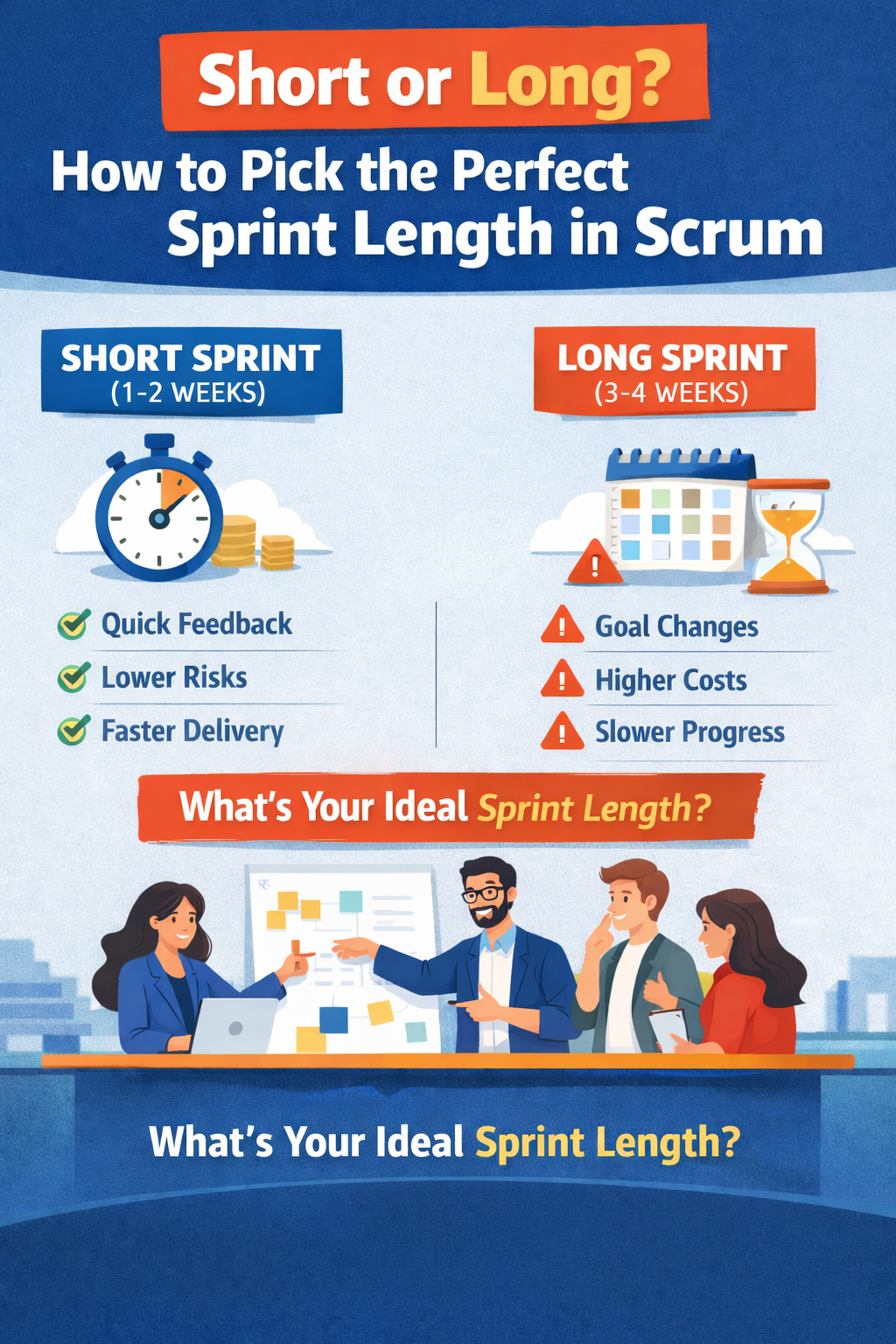
Choosing the right sprint length is one of the most common questions in Scrum. Teams often wonder: should it be short or long? While the official Scrum Guide recommends keeping sprints short but allows flexibility up to one month, the ideal length depends on your team, project, and goals. If you want to master Scrum and Agile practices, enrolling in a Scrum Master course in India with HelloSM can give you practical insights and hands-on training.
What is Sprint Length?
Sprint length is the time a Scrum team commits to complete a set of work, usually resulting in a releasable product increment. There’s no strict rule, but the goal is to make the sprint long enough to deliver value and short enough to allow frequent feedback, learning, and risk control.
The Scrum Guide suggests sprints should not exceed one month. This aligns with Scrum’s principle of empiricism—learning from experience, adapting, and continuously improving through regular feedback.
Who Decides the Sprint Length?
Sprint length decisions are made by the Scrum team itself. Since the team executes the work, they are best placed to determine what duration allows them to work efficiently and learn effectively. The key consideration is the “stimulus-to-response” cycle: how quickly the team wants feedback and can adapt to changes.
Are Short Sprints Better?
Short sprints are generally more effective because they keep the team focused, motivated, and aligned with the sprint goal. While long sprints may feel comfortable, they often lead to complacency, higher costs, and scope creep.
Two-week sprints are popular because they strike a balance between:
- Focus and momentum: Enough time to complete meaningful work but short enough to stay productive.
- Feedback and learning: Frequent opportunities to inspect and adapt plans.
- Predictability: Easier planning and resource allocation with consistent time frames.
However, there’s no universal solution. The ideal sprint length depends on:
- Project complexity: Simple projects may succeed with 1-week sprints, while complex ones may need 3–4 weeks.
- Team dynamics: Some teams perform better with fast cycles, while others need more measured pacing.
- Experimentation needs: If rapid iteration is crucial, shorter sprints allow quicker feedback.
- Stakeholder expectations: Ensure the sprint length aligns with delivery and review schedules.
10 Reasons Short Sprints Work Best
- Stable workflow: Short, time-boxed sprints keep teams productive without creating schedule uncertainty.
- Early feedback: Faster feedback loops help teams learn quickly and reduce cost and effort risks.
- Client involvement: Frequent reviews keep clients engaged in prioritization, requirements, and progress.
- Easier velocity tracking: Short sprints simplify measuring work done, helping maintain steady team velocity.
- Simpler sprint planning: Fewer user stories per sprint reduce meetings and make planning more effective.
- Control scope creep: More frequent reviews prevent adding new requirements mid-sprint.
- Improved focus: Teams stay motivated to achieve sprint goals within a short period.
- Faster learning: Teams can experiment, fail, and adapt quickly without waiting for a long sprint to end.
- Better predictability: Shorter sprints allow realistic planning and task completion.
- Sustainable pace: Helps the team avoid burnout while maintaining productivity.
Finding Your Ideal Sprint Length
There’s no one-size-fits-all answer. Start with a sprint length that fits your team and project, monitor results, and adjust as needed. Some teams thrive with one-week sprints, while others adopt two or three weeks. The key is flexibility, continuous learning, and focusing on value delivery.
Tip
Don’t hesitate to experiment. If a shorter sprint suits your project or a Kanban-like flow works better, try it. The goal is to maximize team agility, speed, and product quality not blindly follow rules.
If you want to learn Scrum in-depth and become a confident Scrum Master, HelloSM offers the best Scrum Master course in India with hands-on exercises, scenario-based learning, and expert guidance to master Scrum, Kanban, and Agile tools.
Frequently Asked Questions
What is the ideal sprint length in Scrum?
The Scrum Guide recommends sprints of up to one month, but many teams prefer 1–2 weeks. The ideal length depends on project complexity, team dynamics, and stakeholder expectations.
Who decides the sprint length in a Scrum team?
The Scrum team decides its own sprint length. Teams doing the work are best suited to choose a duration that balances productivity, feedback, and risk management.
Are short sprints better than long sprints?
Short sprints (1–2 weeks) are often better as they allow faster feedback, reduce scope creep, improve focus, and make planning easier. Long sprints may lead to delays and complacency.
How does sprint length affect Agile productivity?
Shorter sprints help teams learn faster, deliver value frequently, maintain a predictable velocity, and involve clients more effectively in product reviews.
Can sprint length be changed later?
Yes. Teams can experiment with different sprint lengths and adjust based on outcomes, feedback, and project needs. Continuous improvement is a core principle of Scrum.