
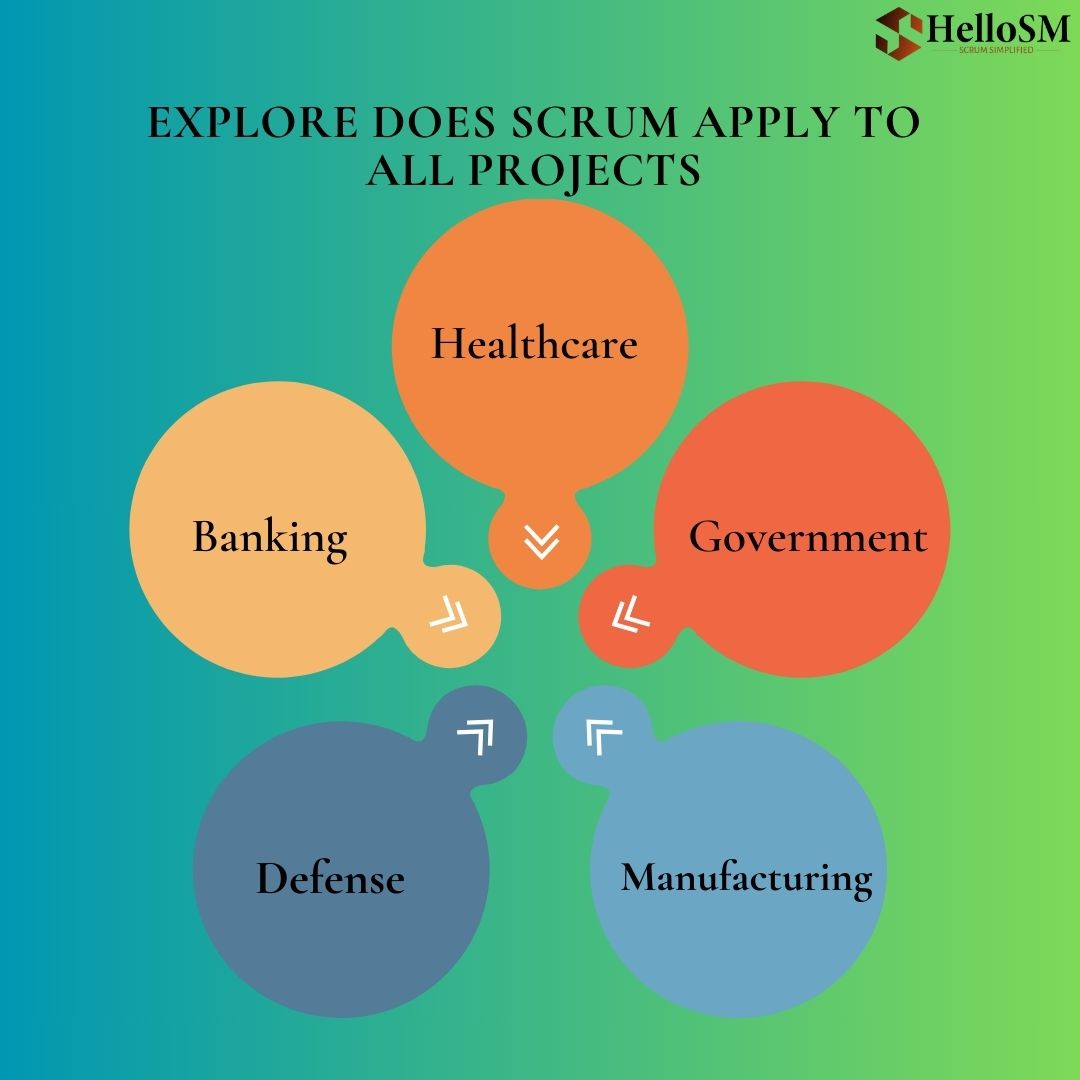
Scrum is one of the most popular Agile frameworks used by organizations across the world. Initially, Scrum was created for software development, but today it is successfully used in many industries like healthcare, banking, government, insurance, defense, and even non-IT fields. Scrum helps teams work in a structured yet flexible way. It focuses on teamwork, transparency, quick feedback, and continuous improvement. Because of these benefits, many professionals are now choosing Scrum as a career path by enrolling in the best Scrum training in India, especially from trusted institutes like HelloSM, a top training institute in Hyderabad.
But an important question still remains does Scrum really work for all types of projects? Let’s understand this in simple terms.
What Type of Projects Are Suitable for Scrum?
- Scrum works best for projects where:
- Requirements may change
- Customer feedback is important
- Work can be delivered in small parts
- Teams need flexibility and speed
Scrum divides work into small cycles called Sprints, making even complex projects easy to manage. That’s why many industries now use Scrum.
Insurance and Finance Projects
Insurance projects often involve complex systems, customer data, and frequent policy changes. Scrum helps by:
- Reducing project costs
- Delivering products faster
- Adapting to market changes easily
- Improving teamwork
Healthcare Projects
The healthcare industry deals with sensitive data, strict deadlines, and patient safety. Traditional project methods are slow and rigid. With Scrum:
- Teams can plan better
- Doctors and staff work more efficiently
- Technology upgrades happen faster
- Patient services improve
Banking Projects
Banks deal with constant upgrades, digital platforms, and customer demands. Scrum helps banks by:
- Speeding up digital transformation
- Improving transaction systems
- Enhancing service quality
- Handling complex customer needs
Defense Projects
Defense projects require high accuracy, quick decision-making, and strong communication. Scrum helps defense teams by:
- Improving transparency
- Allowing quick response to threats
- Enhancing collaboration between teams
- Delivering reliable solutions faster
Government Projects
Government projects are usually large, time-consuming, and expensive when managed traditionally. With Scrum:
- Projects are delivered faster
- Costs are controlled
- Changes can be implemented quickly
- Digital transformation becomes easier
Is Scrum Suitable for Every Team?
Yes, Scrum can be a great fit for most teams, especially:
- Small to medium-sized teams
- Teams handling uncertain requirements
- Projects needing frequent changes
- Customer-focused projects
Scrum works well because it is iterative, meaning teams learn and improve continuously. That’s why professionals from different backgrounds are learning Scrum from the best Scrum training in India, such as HelloSM, known as a top training institute in Hyderabad.
Key Components of Scrum
Sprint Planning:
The team plans what work will be done in the next Sprint.
Daily Scrum:
A short daily meeting where the team shares updates and challenges.
Sprint Review:
The team shows completed work and collects feedback.
Scrum Master:
Guides the team, removes obstacles, and ensures Scrum practices are followed.
Product Owner:
Represents the customer and manages the product backlog.
Development Team:
Builds and delivers the actual product.
Scrum Artifacts Explained Simply
Product Backlog: List of all work needed for the product
Sprint Backlog: Tasks selected for the current Sprint
Increment: Ready-to-release product at the end of each Sprint
Advantages of Using Scrum
Easy to Handle Changes:
Scrum allows changes at any stage without disturbing the entire project.
Faster Product Delivery:
Products are released in small parts, helping companies reach the market quickly.
Better Business and IT Alignment:
Scrum connects business goals with technical execution.
High Project Visibility:
Everyone knows what is happening, reducing risks and delays.
Scrum is not limited to IT or software projects. It can be applied to almost any type of project, whether small, large, simple, or complex. Its flexibility, transparency, and speed make it suitable for today’s fast-changing world. If you want to grow your career as a Scrum Master or Agile professional, enrolling in the best Scrum training in India from HelloSM can help you gain real-world skills and confidence.
Frequently Asked Questions
Is Scrum useful only for software development, or can it be used in other industries?
Scrum is not limited to software development. While it was originally designed for IT projects, today it is widely used in industries like healthcare, banking, insurance, government, marketing, education, and even manufacturing. Scrum focuses on teamwork, flexibility, and delivering value in small steps, which are needed in almost every industry.
How does Scrum help when project requirements are not clear at the beginning?
Scrum works best in situations where requirements are uncertain or continuously changing. Instead of planning everything upfront, Scrum allows teams to work in short cycles called Sprints. After each Sprint, feedback is collected and improvements are made. This approach reduces risk and avoids rework.
Can Scrum be applied to large and complex projects?
Yes, Scrum is highly effective for large and complex projects. Big projects are broken into smaller tasks and handled in multiple Sprints. This makes work more manageable and transparent. Teams can identify issues early and fix them before they become major problems. Many large organizations in banking, defense, and government use Scrum for complex projects.
Why should someone learn Scrum from a professional training institute?
Learning Scrum from a professional institute helps you understand not just theory, but also real-time implementation. A structured training program explains roles, events, artifacts, and real project challenges clearly. Institutes like HelloSM, a top training institute in India, provide hands-on examples, interview preparation, and industry-focused guidance.